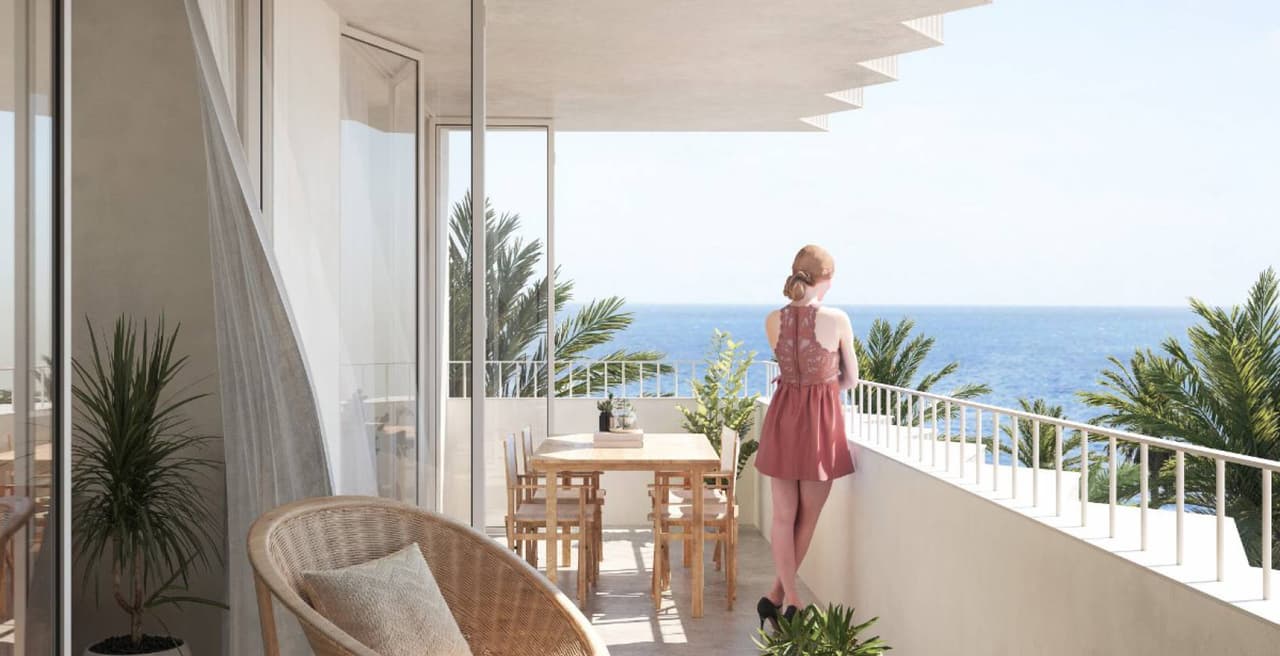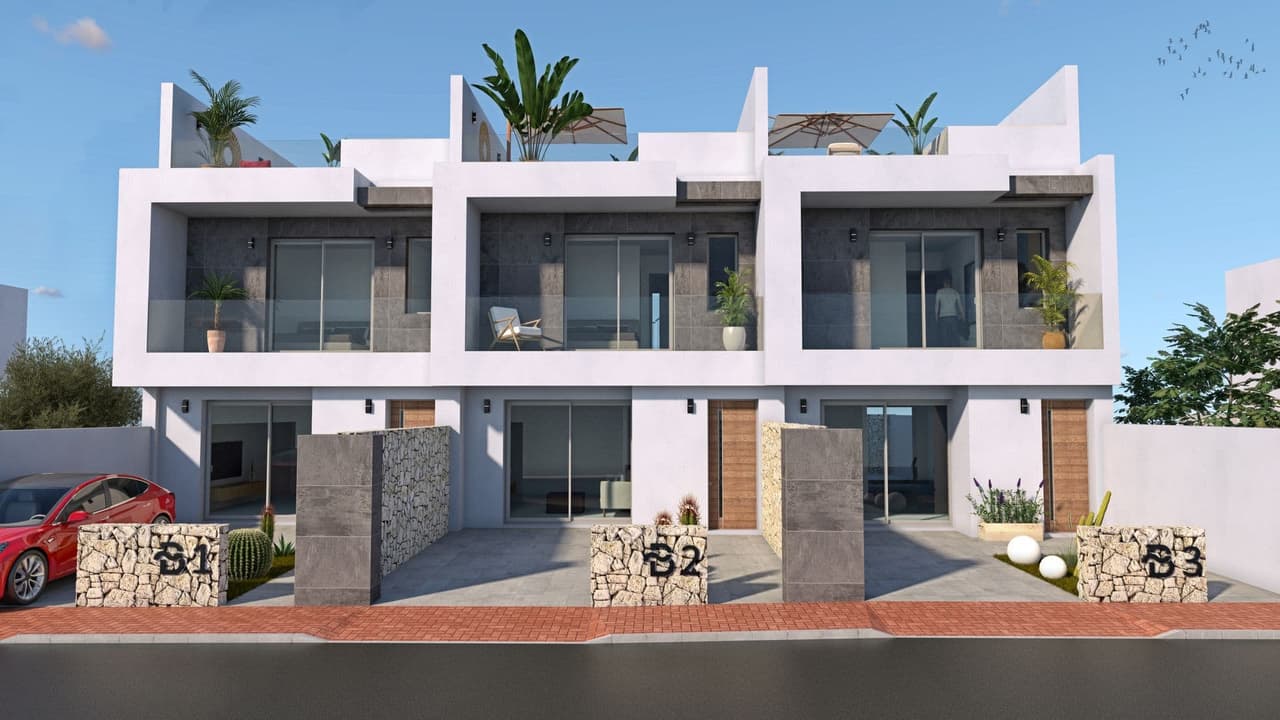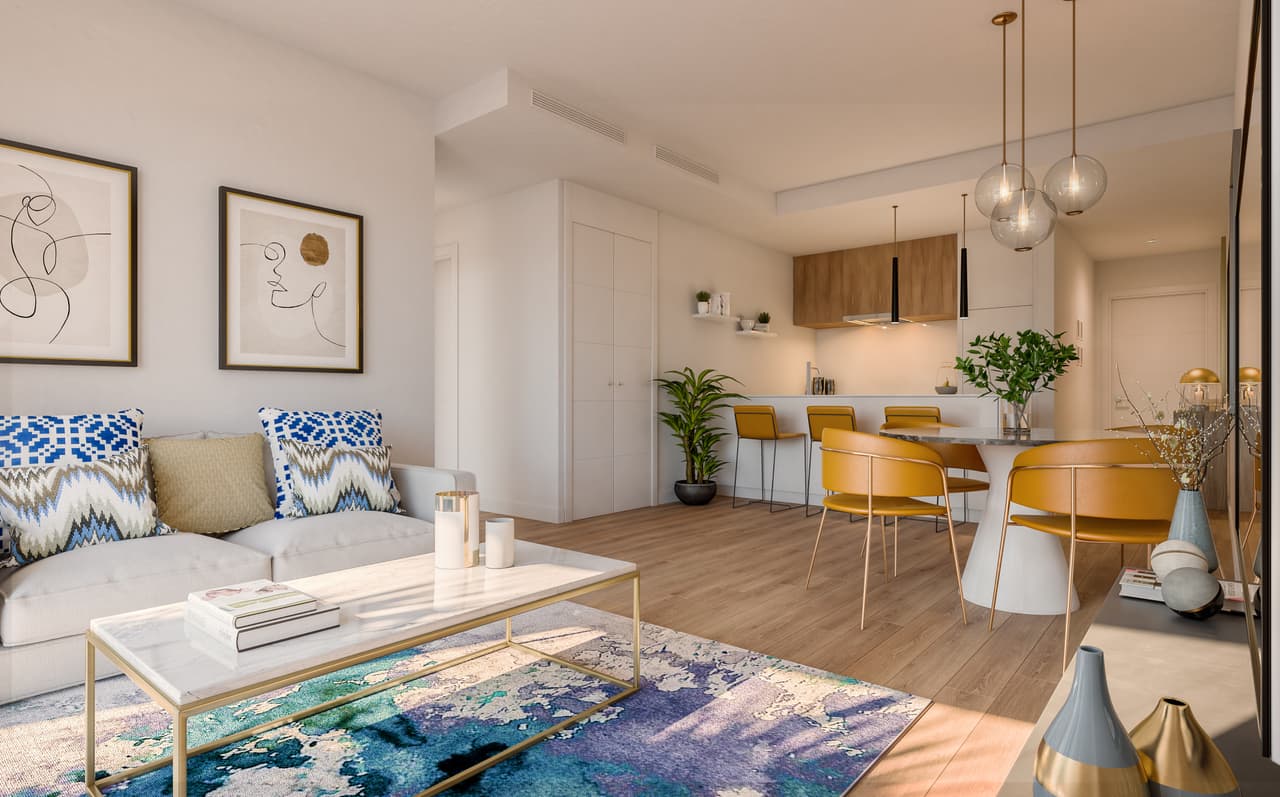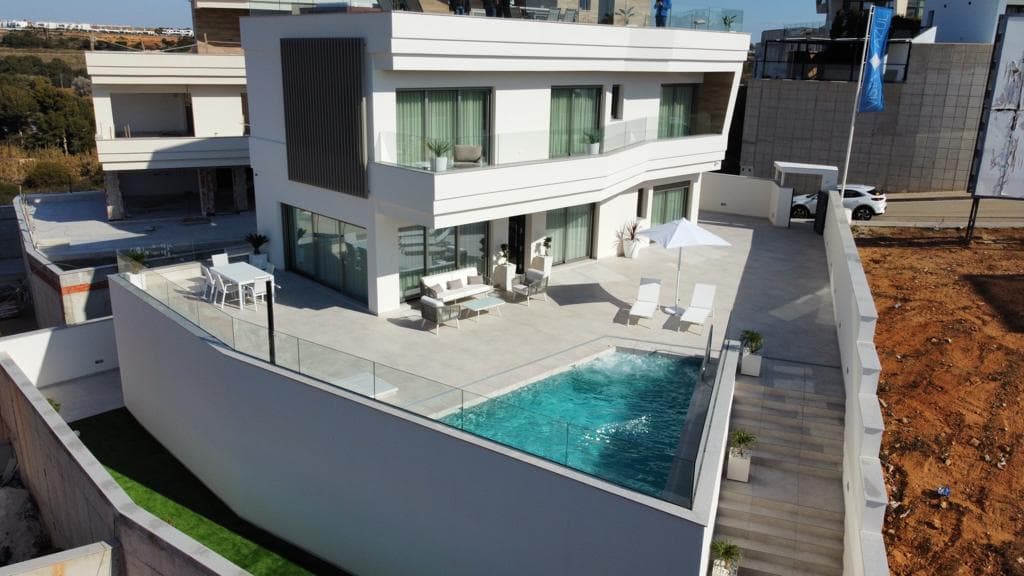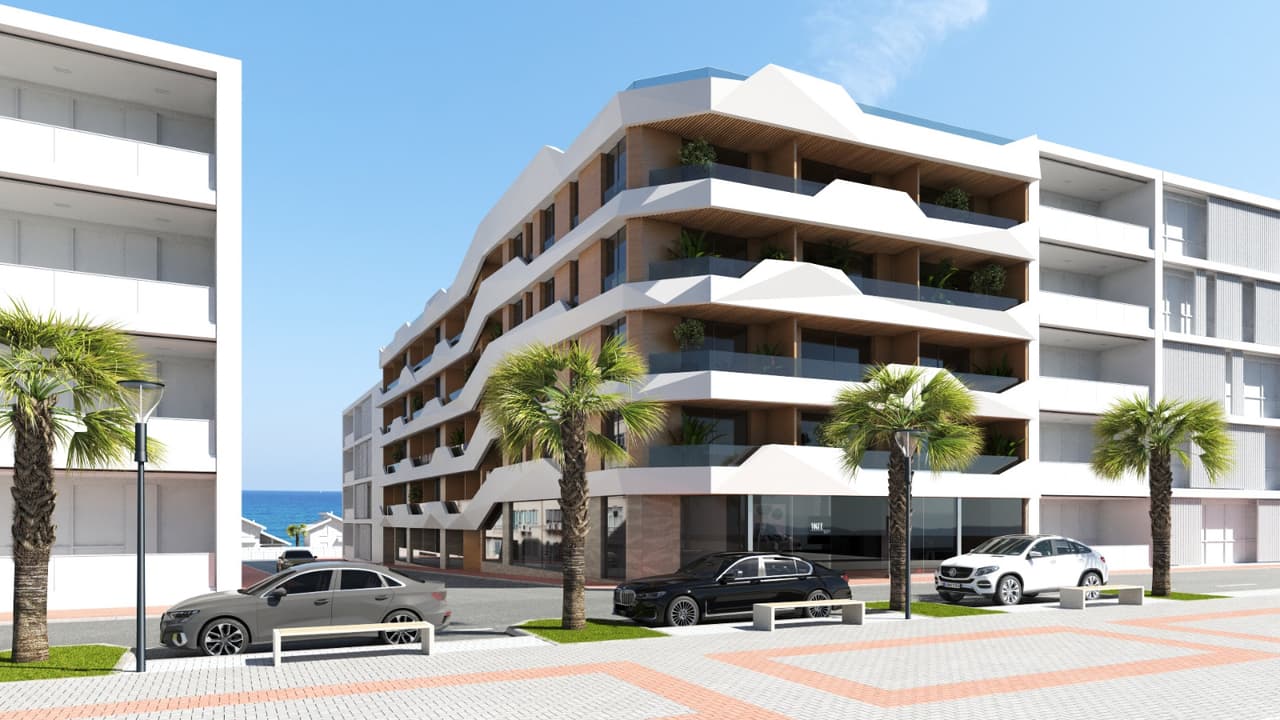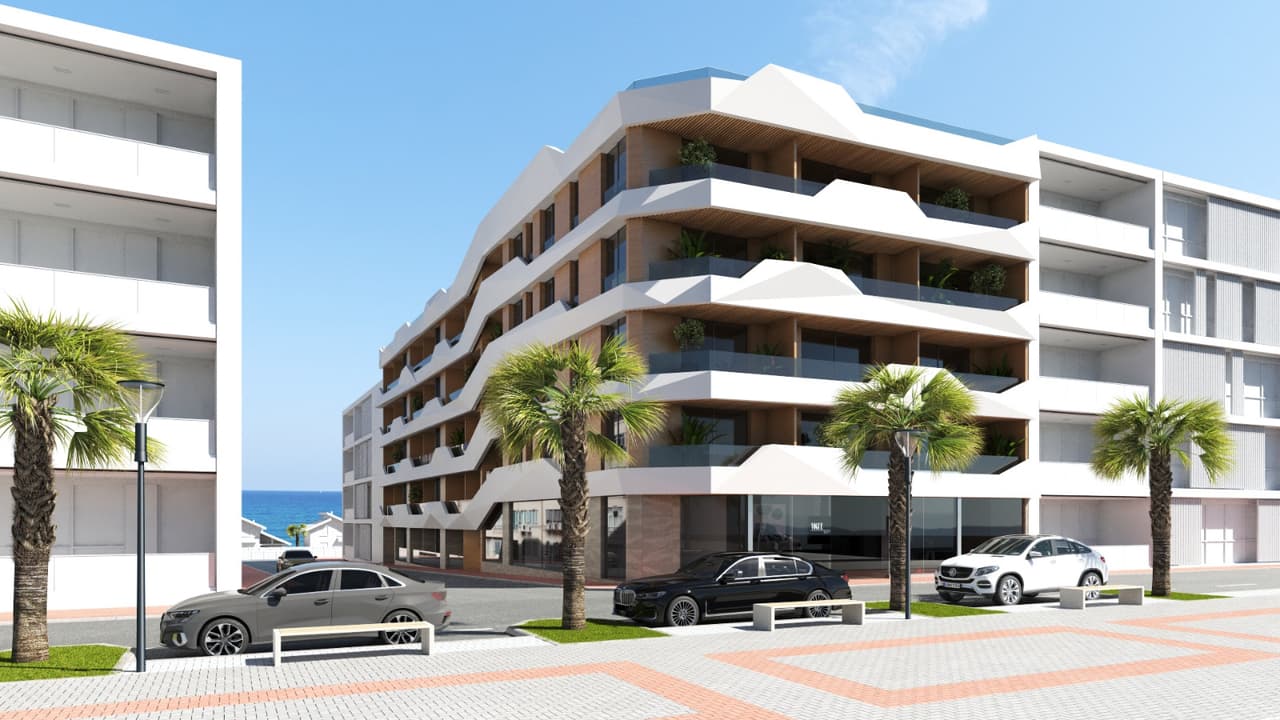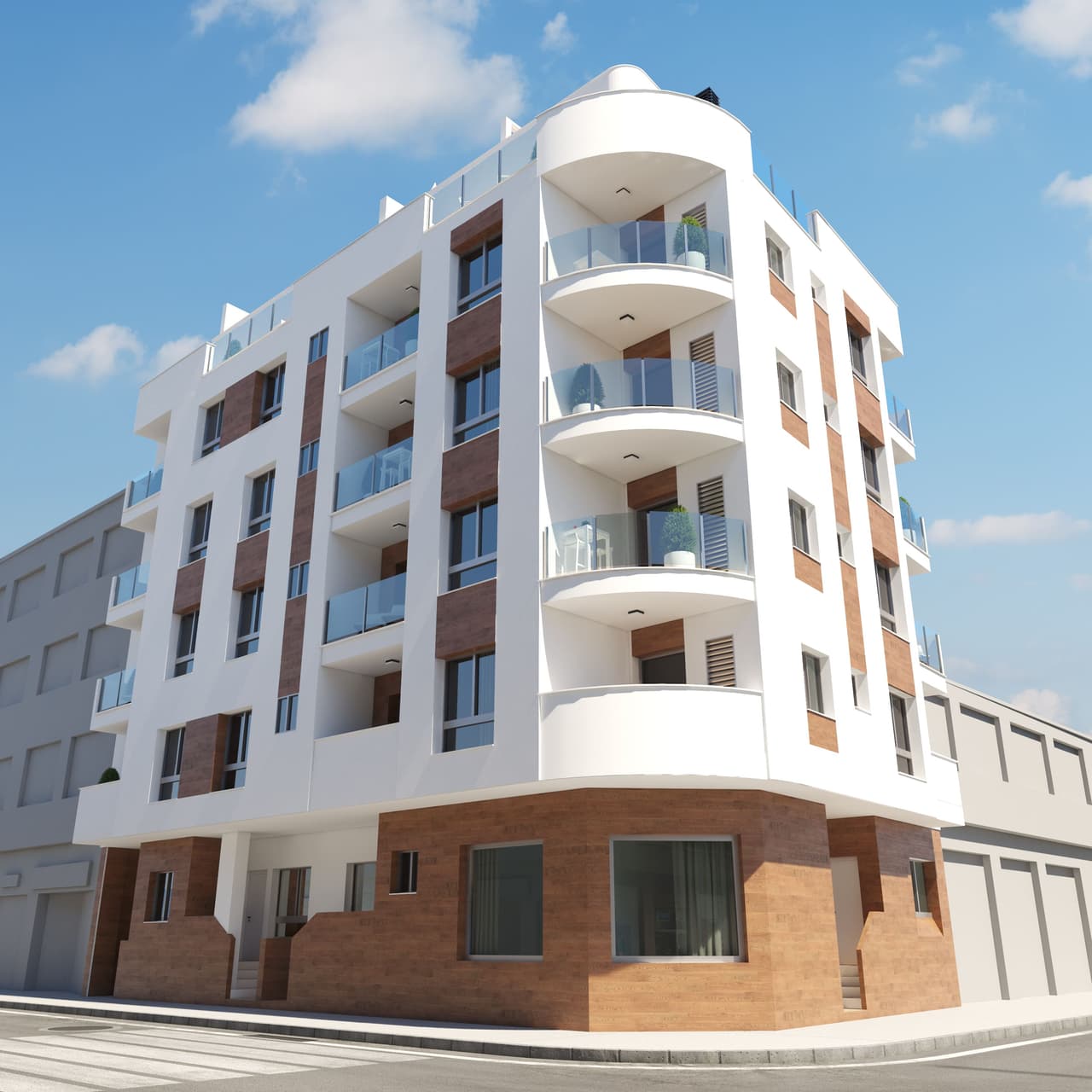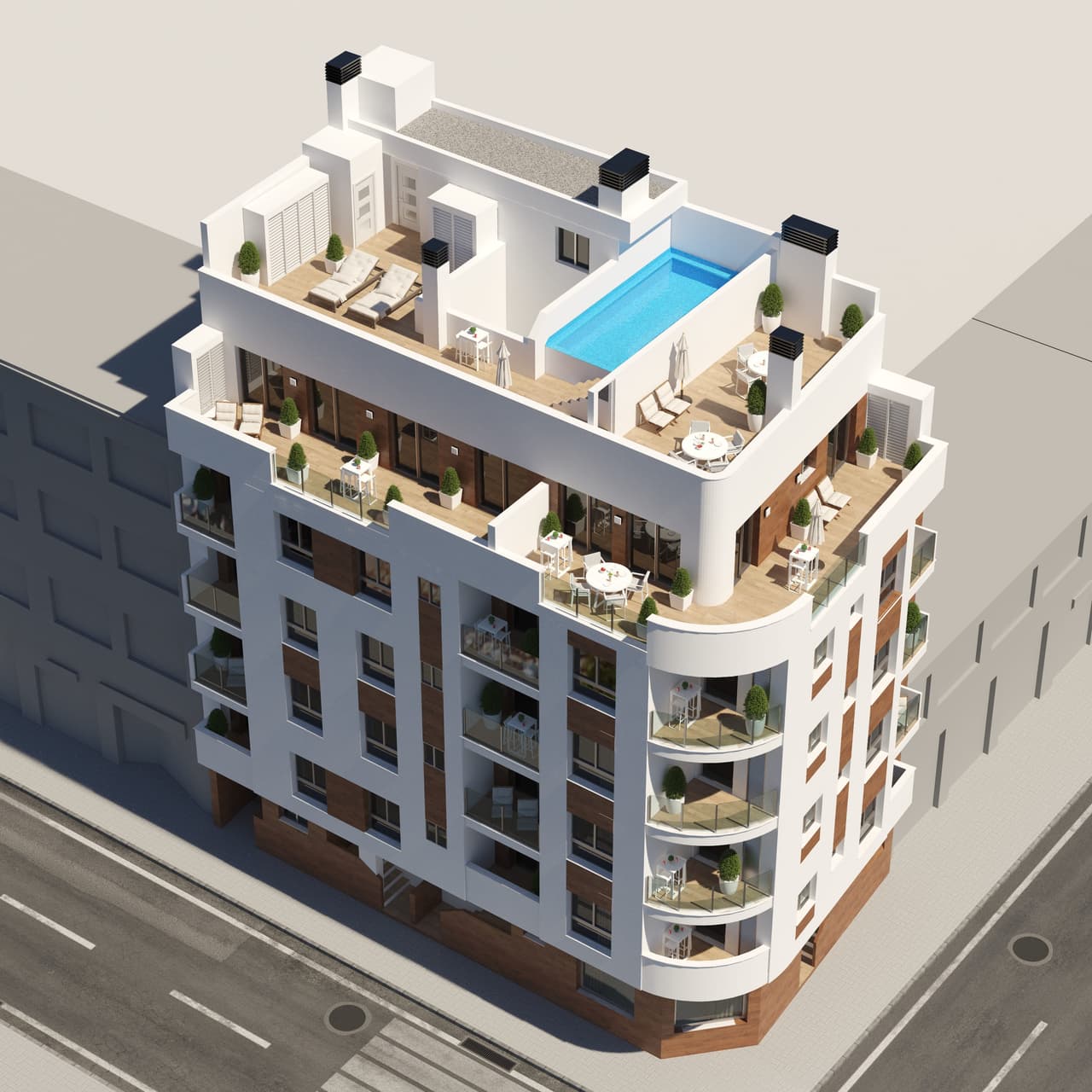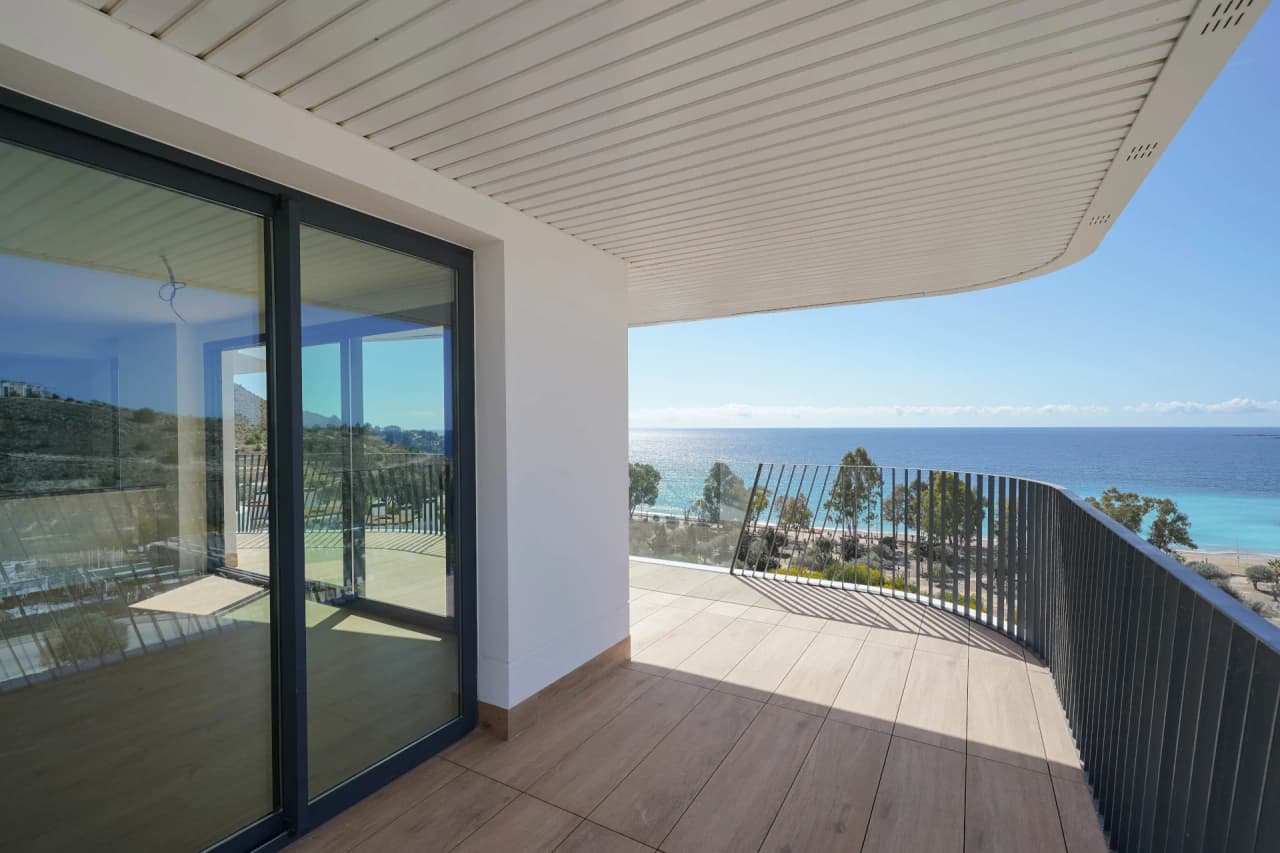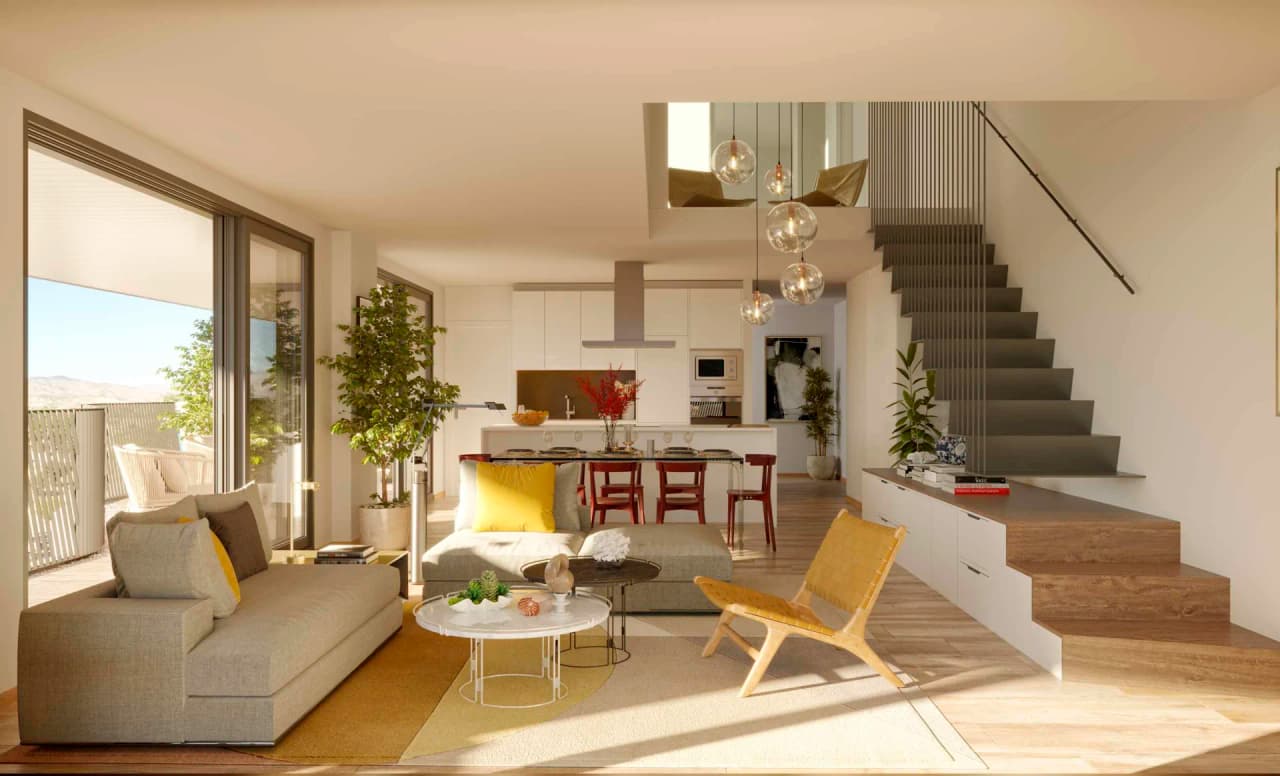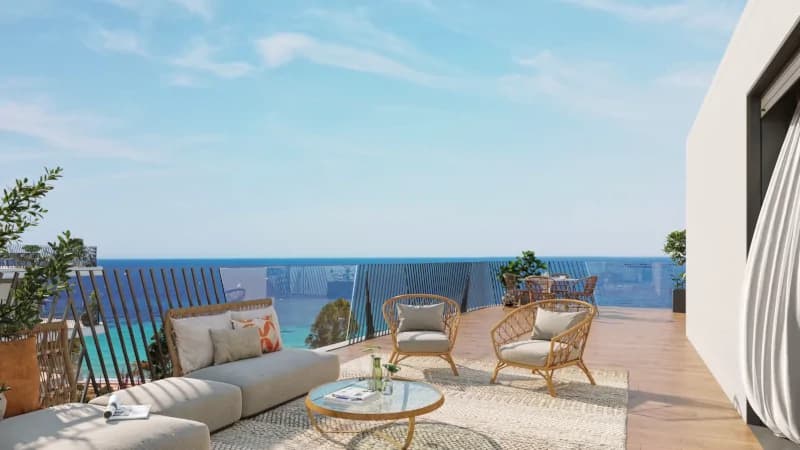

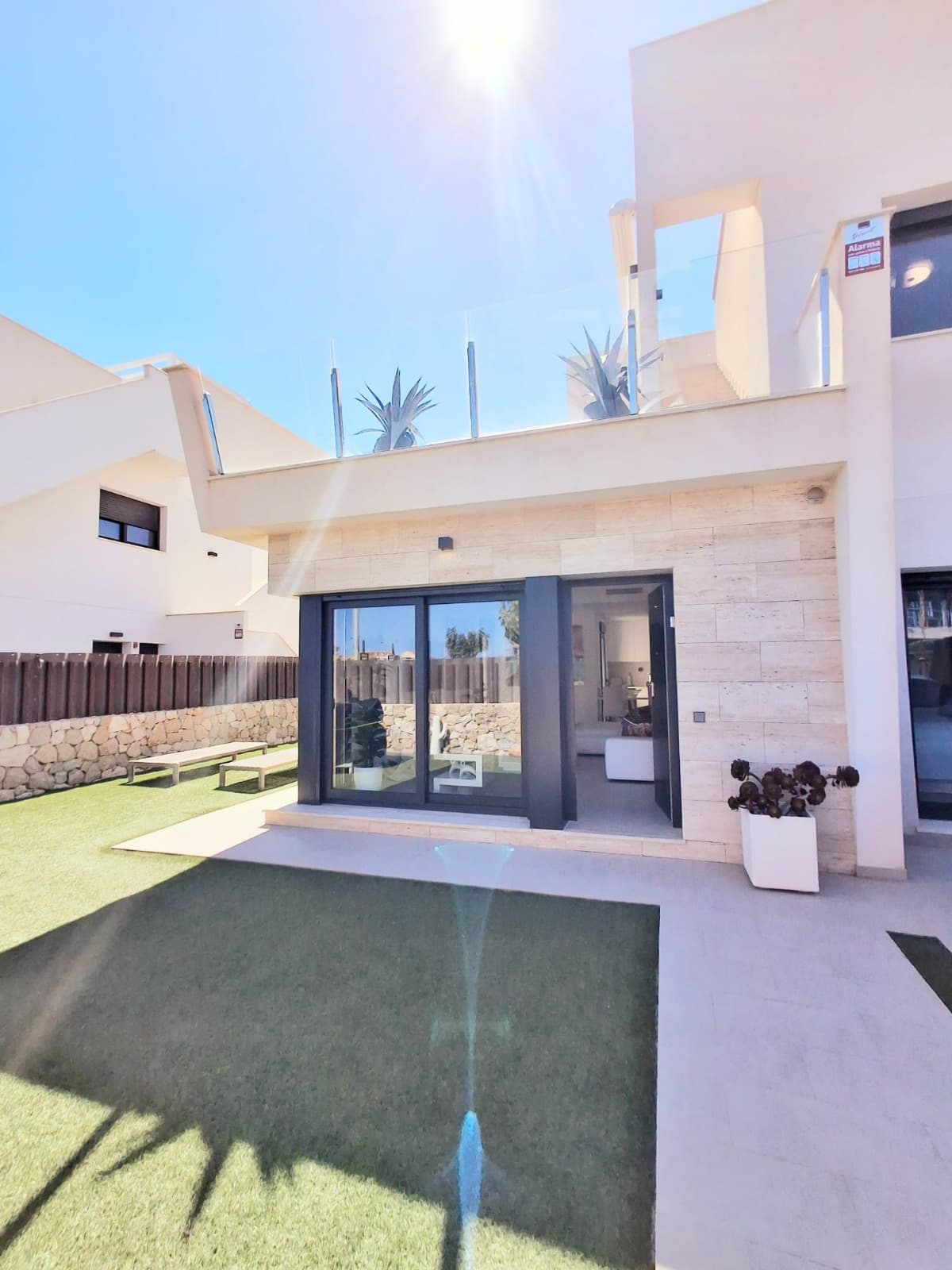
Close to the beach
1/12
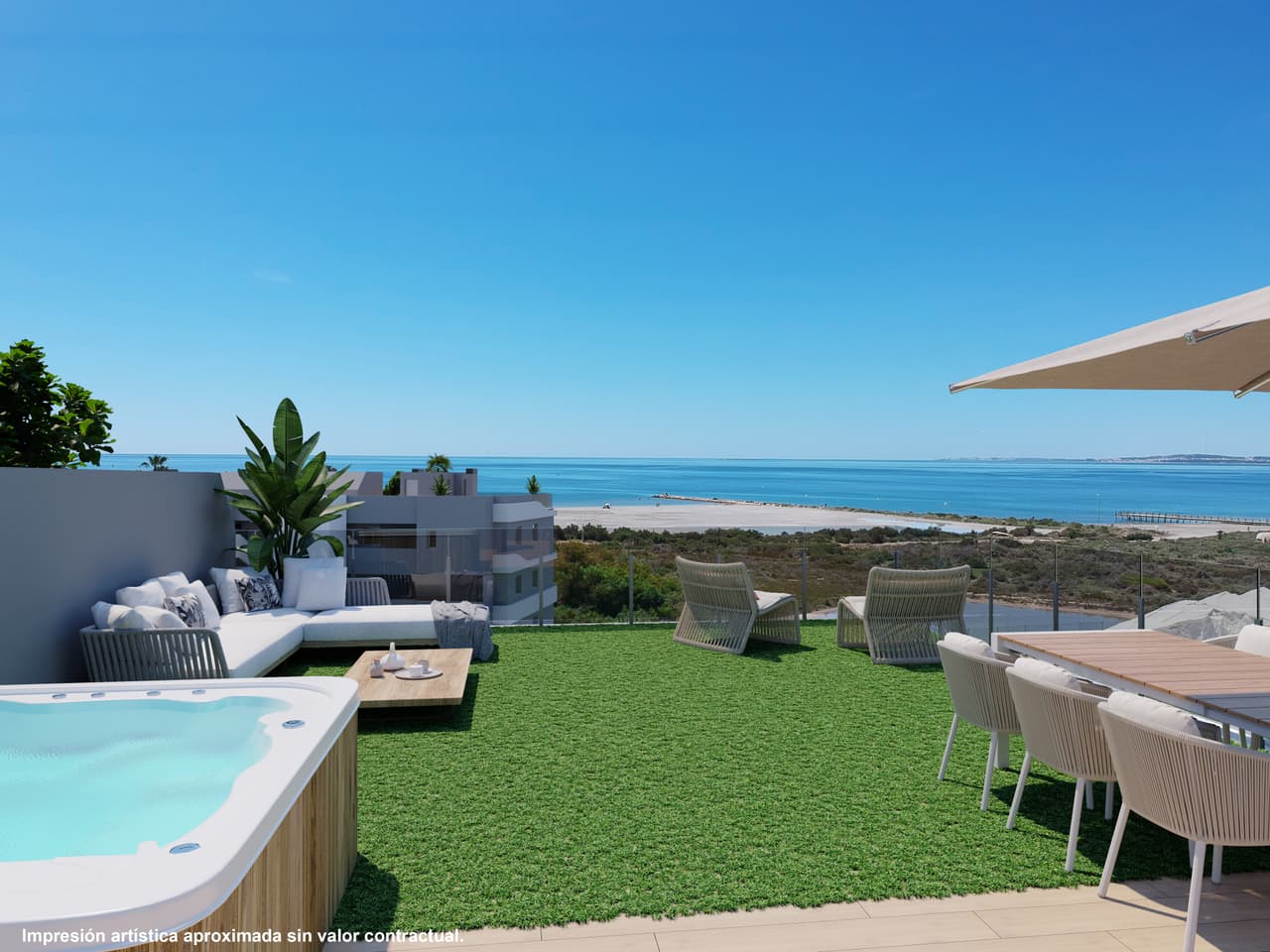
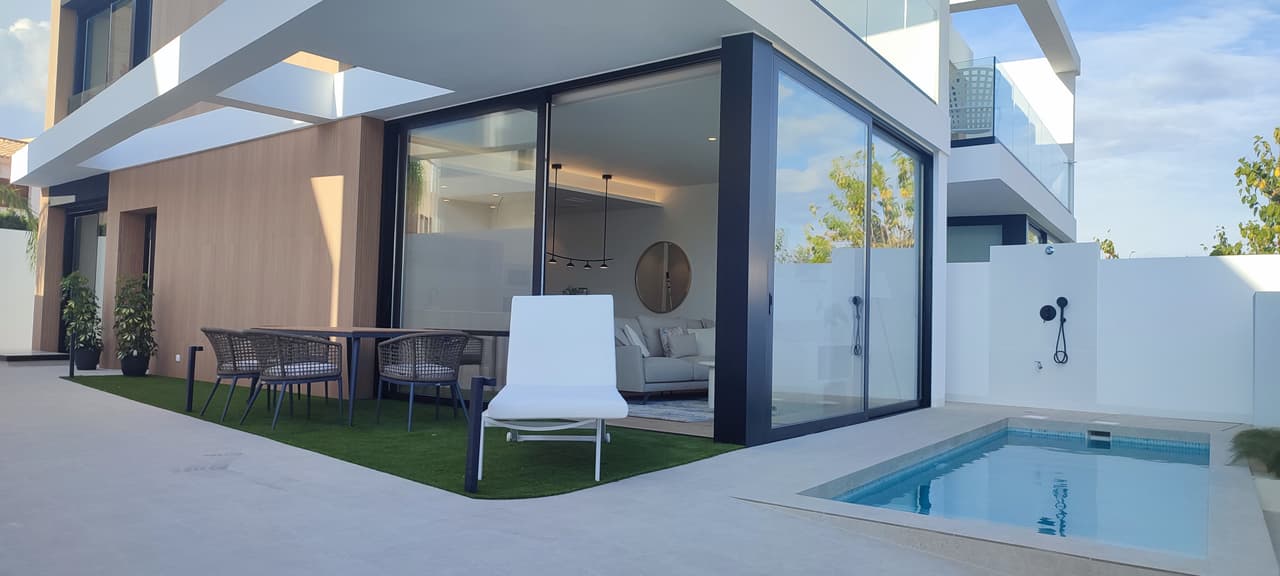
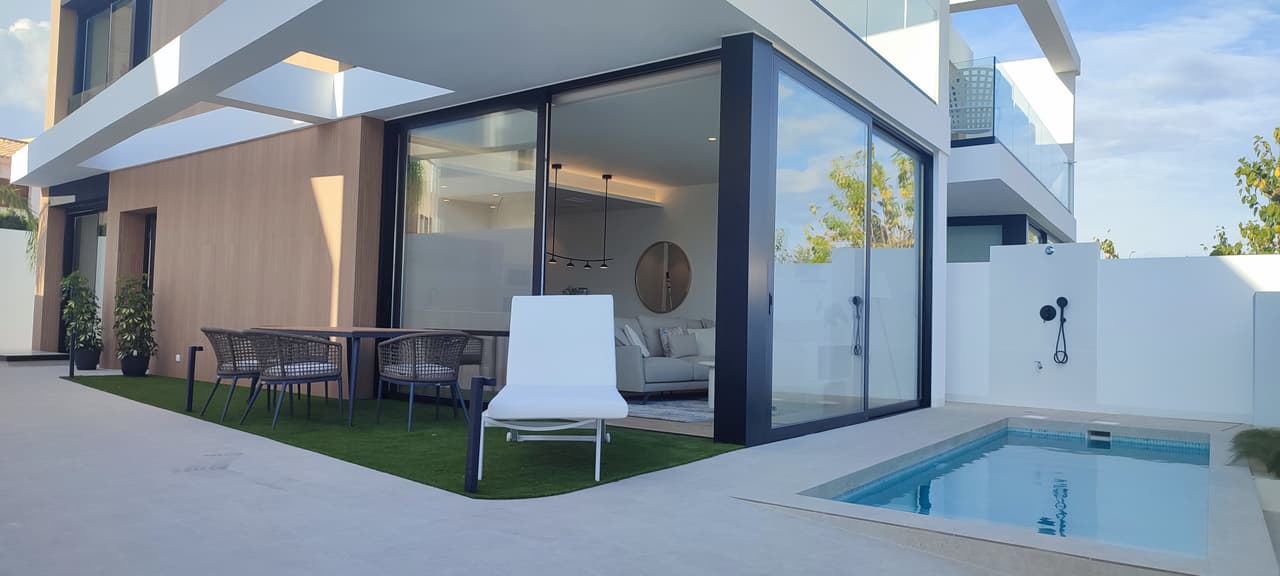
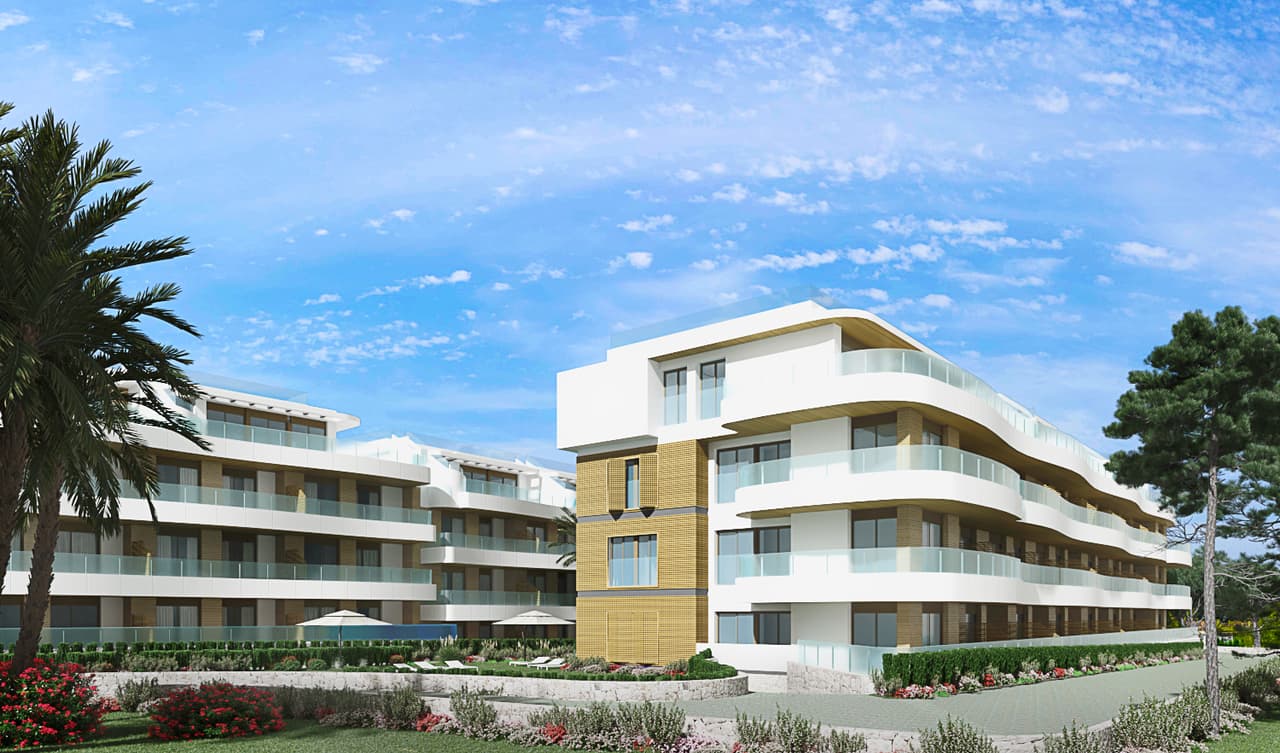
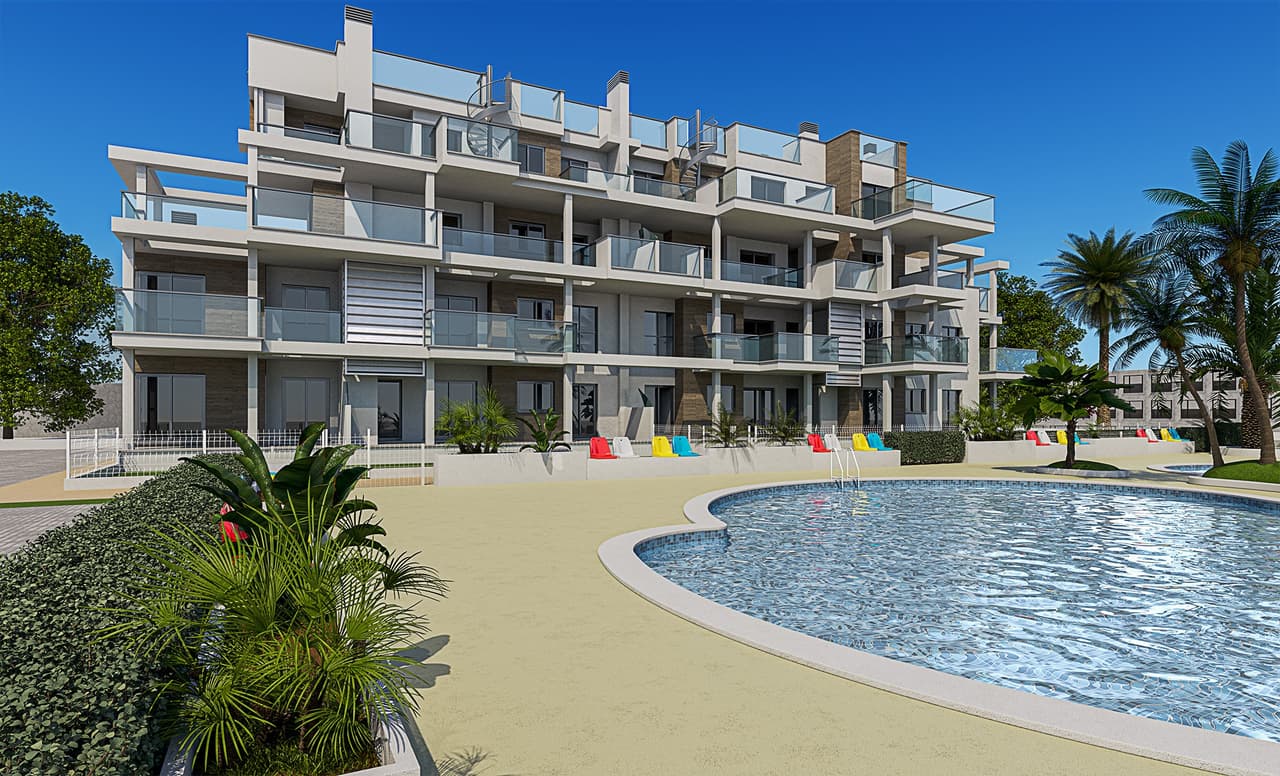
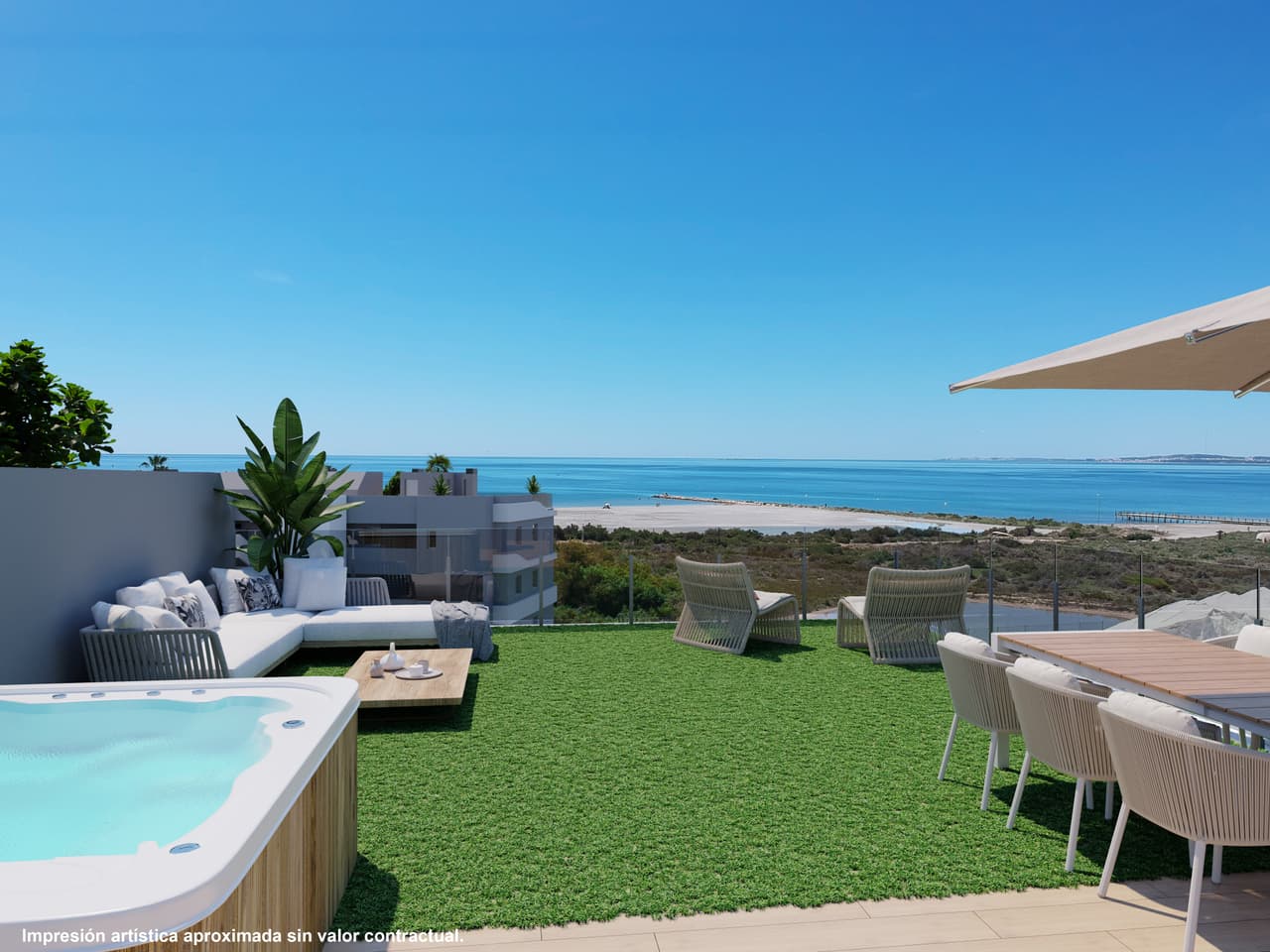
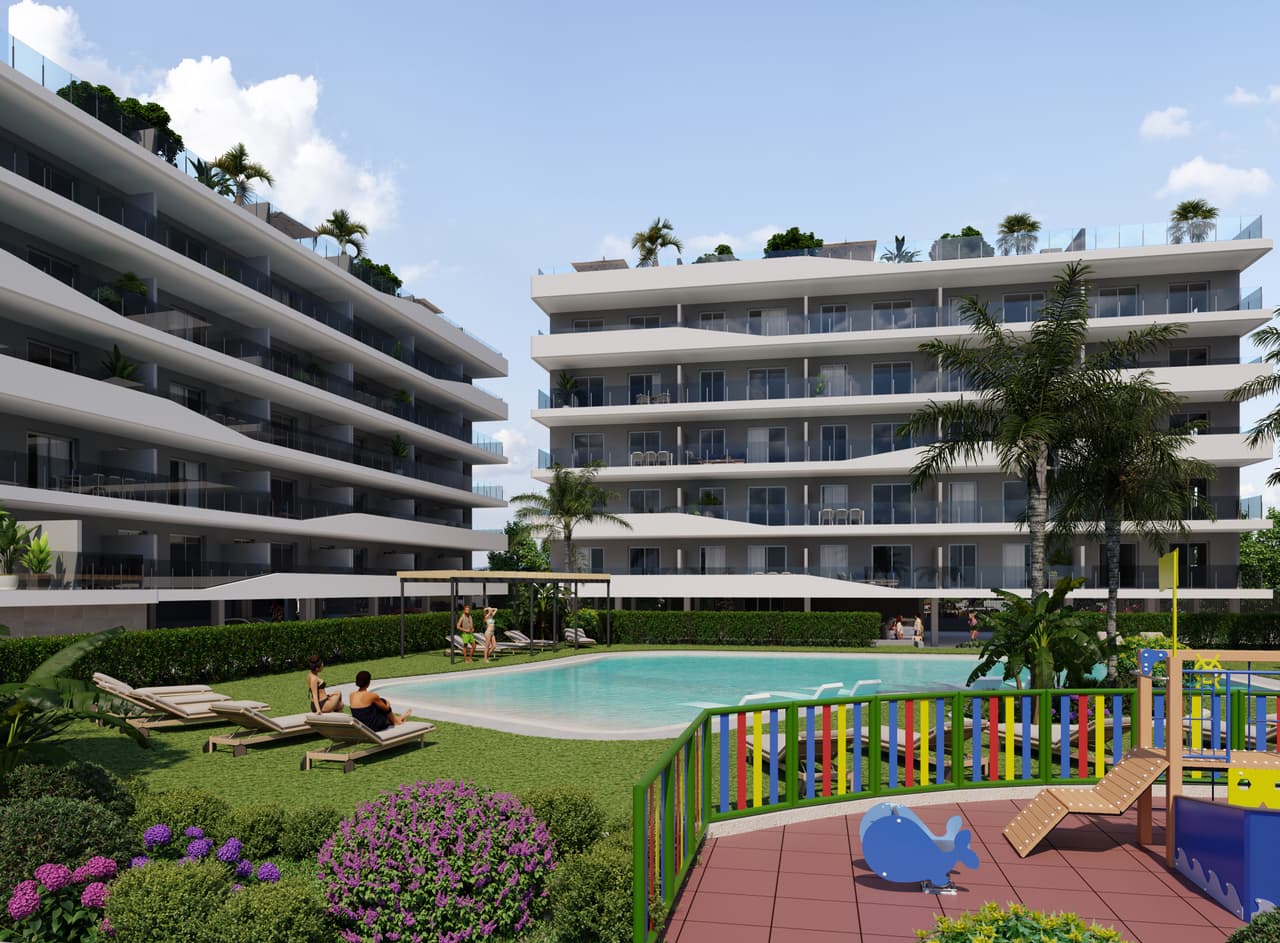
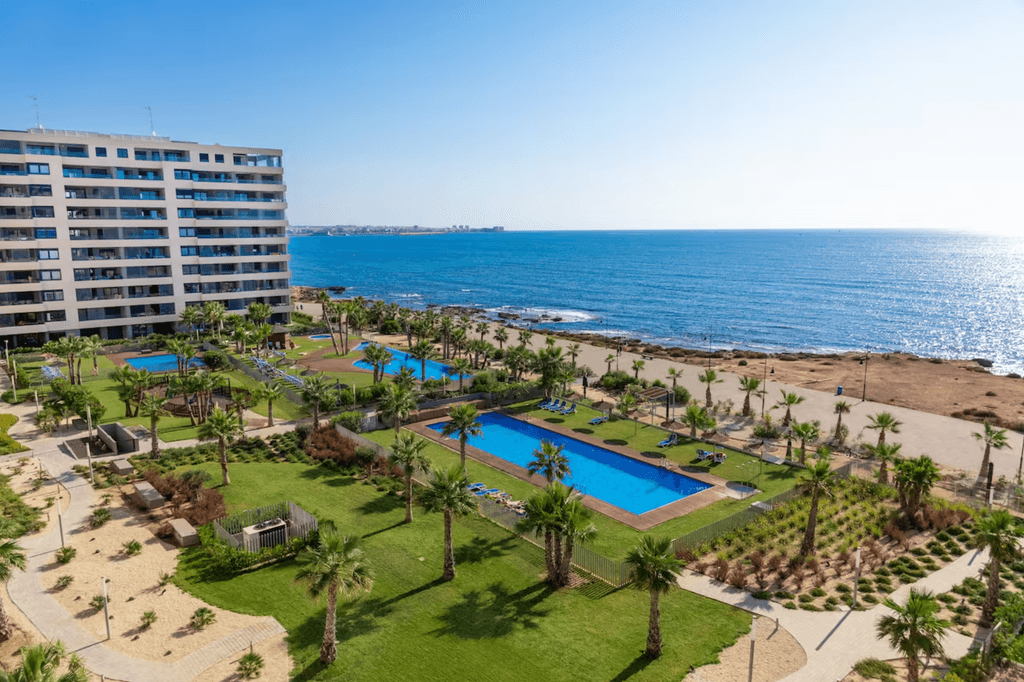
Villa with 3 bedrooms, garden, solarium, and communal pool by the beach in Torre de la Horadada
€435 000
Torre de la Horadada, Costa Blanca Południe
Nr Ref: HP21390
32109,3 m²
Apartments, villas and homes near the beach — for buyers seeking the perfect blend of Mediterranean lifestyle and long-term asset value.
Concierge buying support in English · Legal verification · Notarial deed
Browse by type
Convenience, easy beach access and the best price-to-quality ratio. Perfect for couples, families and investors.
from €169,000 →More private space, garden and solarium. Great for families with longer stays.
from €284,000 →Maximum privacy, prestige and private pool. Frontline and first-line — rare assets.
from €353,000 →Large terraces with sea views. The premium middle ground between an apartment and a villa.
from €364,900 →The latest and most interesting apartments in our portfolio
Free consultation
Tell us your priorities — budget, location, property type. We will prepare a shortlist tailored to you, without pressure or irrelevant listings.
Regions & cities
Torrevieja, Orihuela Costa, Guardamar. Best price-to-quality ratio on the Costa Blanca.
~€2,442/m²Denia, Jávea, Altea, Calpe. Boutique coastal towns with a more rugged shoreline.
~€3,325/m²160 km of coastline, 125 beaches, 12 marinas. Prestige and a strong premium rental market.
~€4,106/m²Quiet, natural beaches and coves. Lowest entry price in the Mediterranean.
~€1,718/m²Popular with international buyers. Blue Flag beaches, marina, rental market.
from €169,000Luxury and prestige. Puerto Banús, golf, Michelin dining. The top address in southern Spain.
~€5,572/m²Major port city with full infrastructure. Airport with 228 routes, beaches, marina.
~€2,515/m²The "Garden City" of Costa del Sol. Growing market, new-build projects, great value for the brand.
~€4,242/m²Costa Cálida. Mar Menor, Blue Flag beaches, modern apartments at accessible prices.
from €254,000Living by the sea in Spain has something that is hard to find elsewhere in Europe: mornings on the terrace, a long outdoor season, a mild Mediterranean climate and a daily life where the beach, marina, promenade, restaurants and sport become part of the normal rhythm of the day — not just a holiday exception. That is precisely why seaside properties in Spain attract not only those looking for a second home, but also buyers who want to combine a lifestyle choice with a solid asset in one of the strongest resort markets on the continent.
For an international buyer this market is broad and very practical. You can choose between a compact seaside apartment, a penthouse with sea views, a townhouse or bungalow near the beach, or a private seafront villa. At Horizon Properties you can move from a broad overview of properties in Spain to more targeted pages by type, region and city — and get concierge-level buying support in English every step of the way.
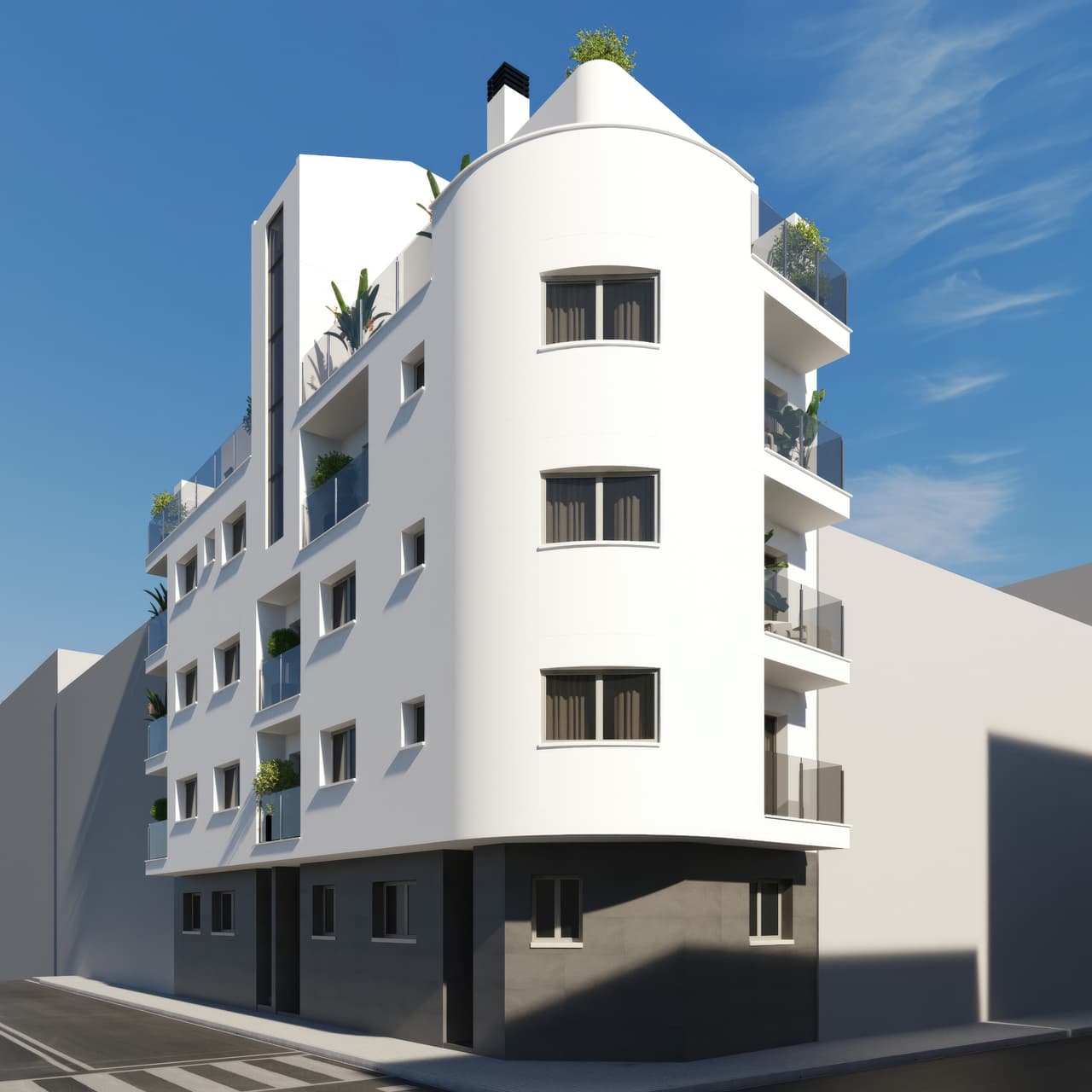
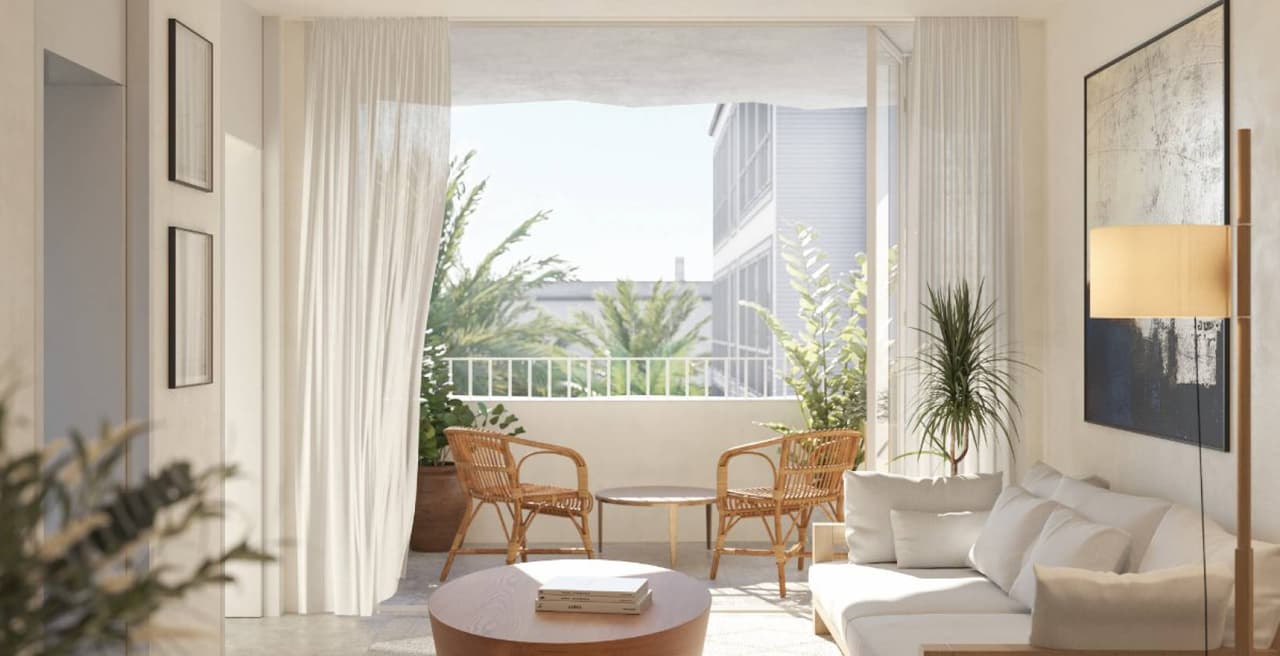
Apartments near the beach are the most common first choice when convenience, quick beach access and a good budget-to-quality ratio matter most. They are ideal for couples, families buying a second home, remote workers and investors who want a property that is easy to manage — especially in modern complexes with a pool, lift, parking and shared amenities. The range runs from more affordable apartments on the Costa Blanca and Costa Cálida to higher-spec, modern units on the Costa del Sol. From an investment perspective, apartments offer the lowest entry price and typically the greatest resale liquidity.
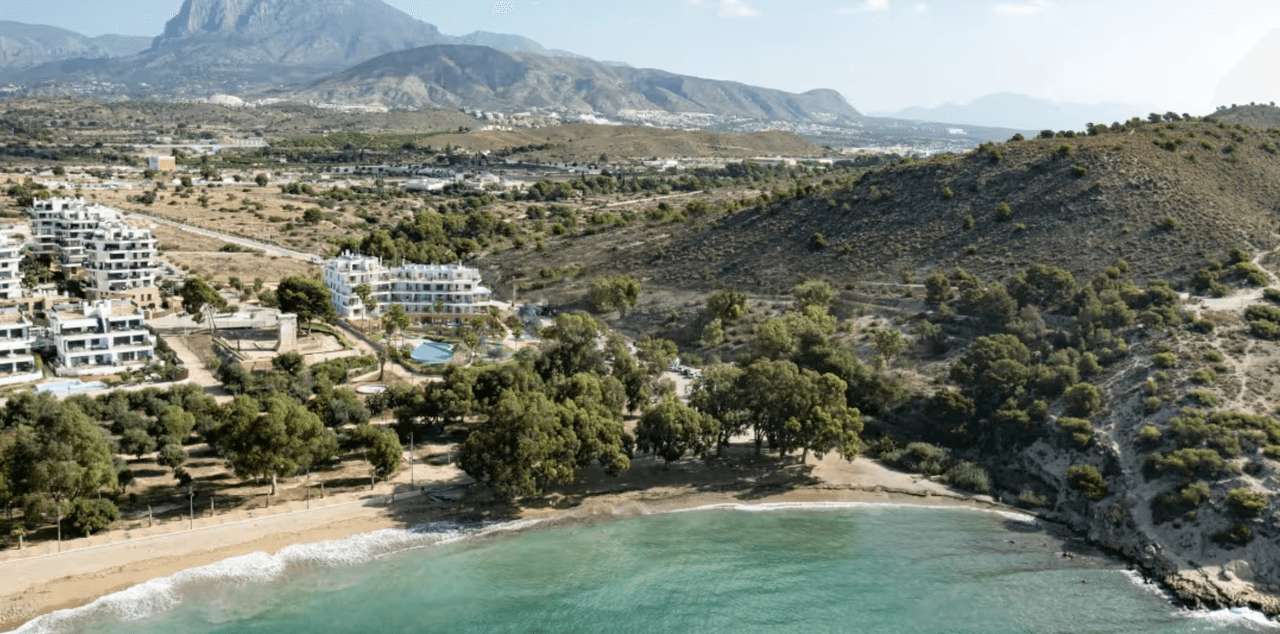
2-bedroom apartment with spacious terrace – Villajoyosa, Costa Blanca
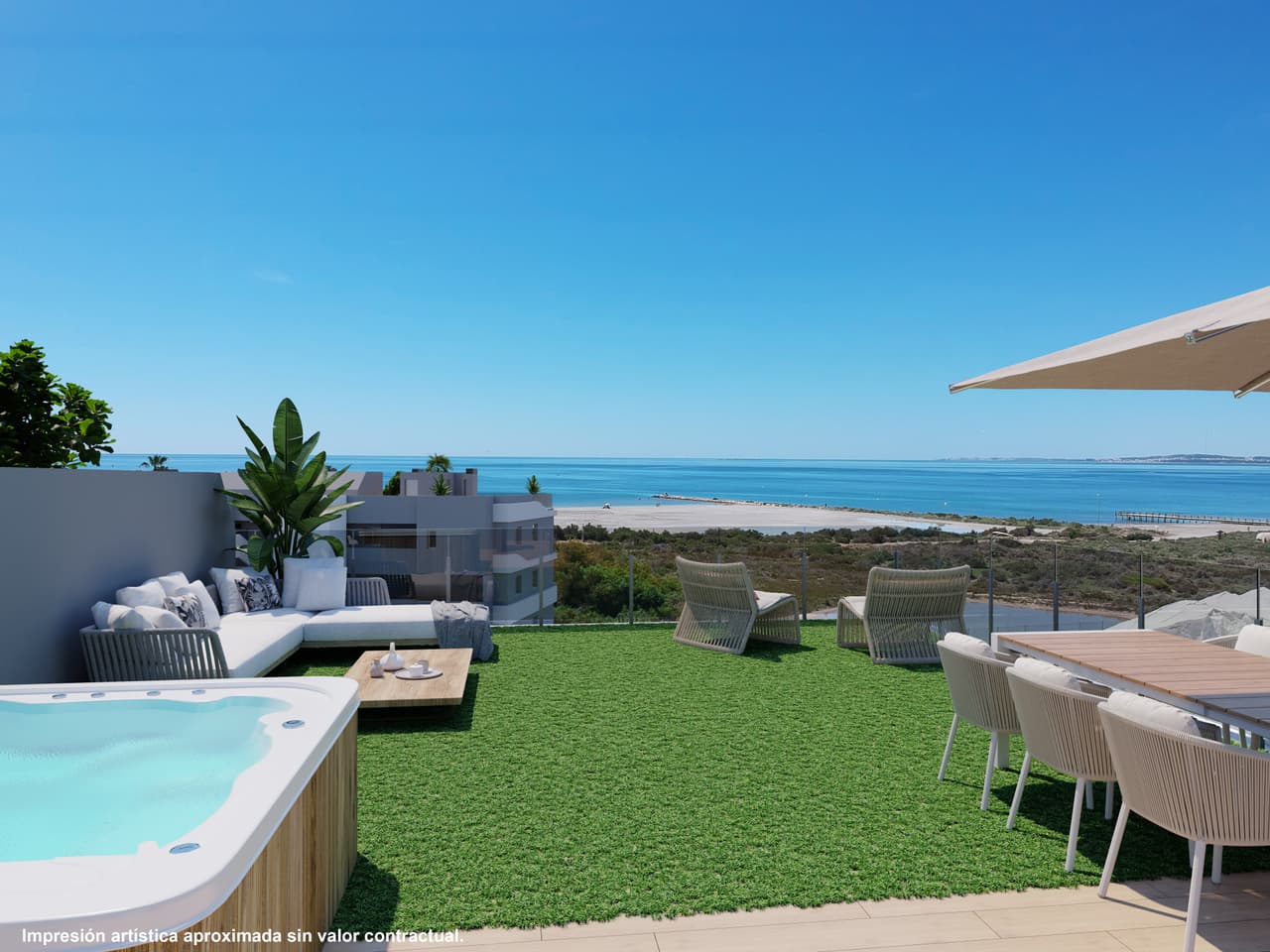
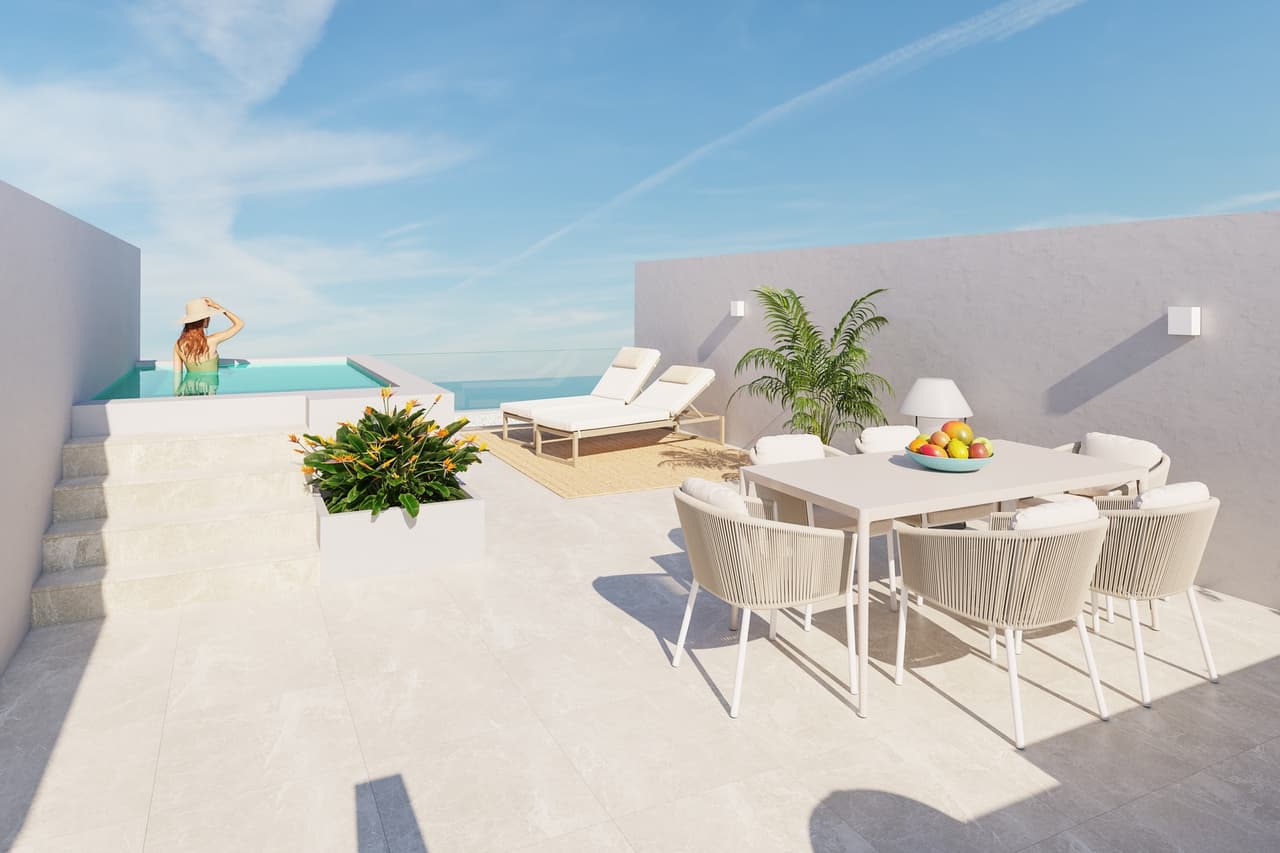
Ref. HP20393A penthouse is the proposition for the buyer who wants more privacy, a large terrace and wide sea views without moving straight to villa prices. In Spain this is often a premium product: higher up, more prestigious and less available — which makes it attractive both for lifestyle buyers and for investors targeting the quality rental segment. Horizon highlights penthouses as the middle ground between an apartment and a villa, with options featuring a solarium, jacuzzi and large terraces on the Costa Blanca. The limited supply of frontline units is a key part of their appeal.
Houses and bungalows near the sea are especially attractive for families and buyers who want more private space, a garden, solarium or easier car access than a typical apartment block offers. They suit people planning longer stays, frequent visits with children or a partial relocation. On the Costa Blanca South and Costa Cálida you can find terraced houses, bungalows and semi-detached homes with private outdoor areas — often at prices below standalone villas.
Seafront villas are the segment for buyers seeking maximum privacy, space and prestige. In practice three types of buyer purchase them: families planning regular stays in Spain, premium buyers treating the property as a primary base, and investors looking for an asset with limited supply in the best locations. A villa offers what even the best apartment cannot: your own garden, private pool, greater independence and often a significantly better sun exposure and view. In micro-locations such as Marbella, Finestrat or Torre de la Horadada it can deliver the strongest prestige effect and the most durable capital value.
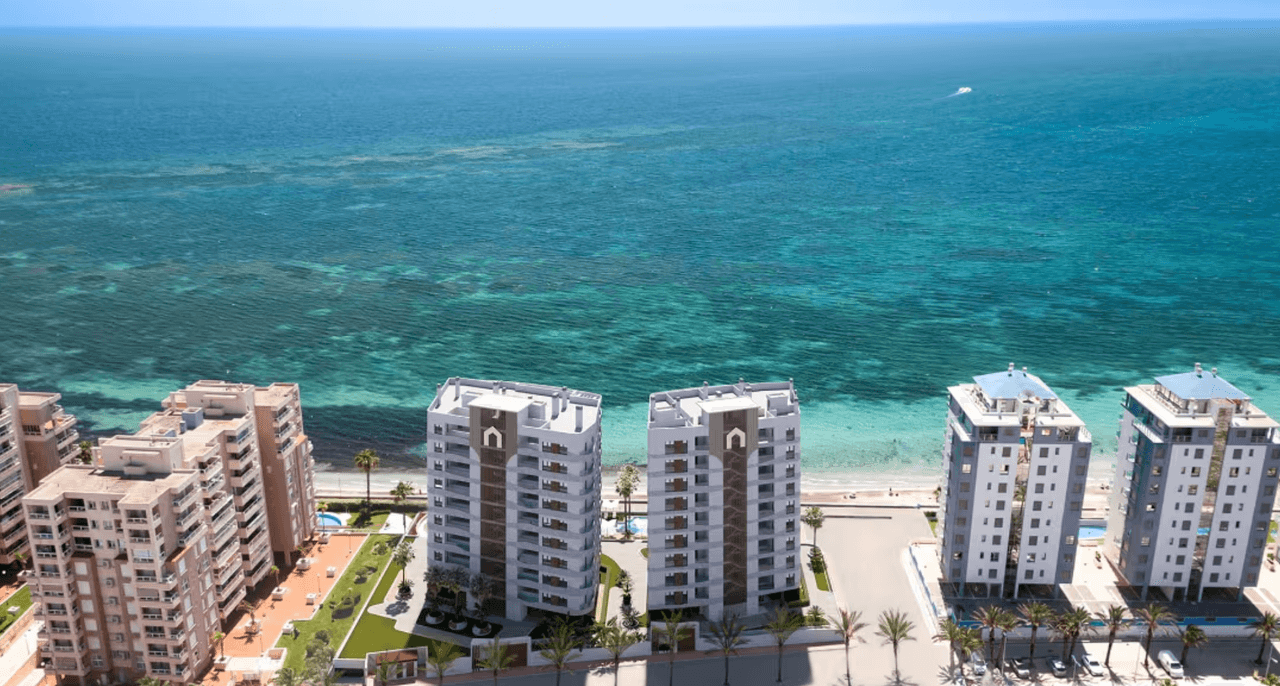
1-bedroom apartment with terrace and sea views – La Manga, Costa Cálida
Ref. HP21537Looking at market data from March 2026, the difference between the main coasts is very clear. Average asking prices were €2,732/m² in Alicante province (most of the Costa Blanca), €4,106/m² in Málaga province (Costa del Sol) and €1,718/m² in the Murcia Region. In practical terms: new 2-bedroom apartments on the Costa Blanca South and Costa Cálida range from €254,000 to €339,000, new apartments on the Costa del Sol in Estepona start from around €425,000, penthouses on the Costa Blanca from around €364,900, and villas from around €353,000 on Costa Cálida up to several million euros in Marbella.
The most meaningful price difference is not just between regions, but between genuinely beachfront properties and those marketed as "near the sea". A 2-bedroom apartment in Campoamor, 500–1,000 m from the beach, starts from €284,000 plus VAT; a comparable apartment in Torrevieja positioned 50 m from the beach starts from €433,000 plus VAT. In practice this means that frontline and first-line properties carry a significant premium even within the same stretch of coast — you are paying not just for square metres but for the view, the genuine walking distance to the sea and the scarcity of supply.
Costa Blanca remains the most versatile choice for international buyers. It combines Mediterranean lifestyle, a broad price range and a large number of towns and resorts, all served by Alicante-Elche airport, which handled 20 million passengers and 228 routes in 2025. Horizon covers both Costa Blanca South and Costa Blanca North in depth, with city pages including Alicante and Torrevieja.
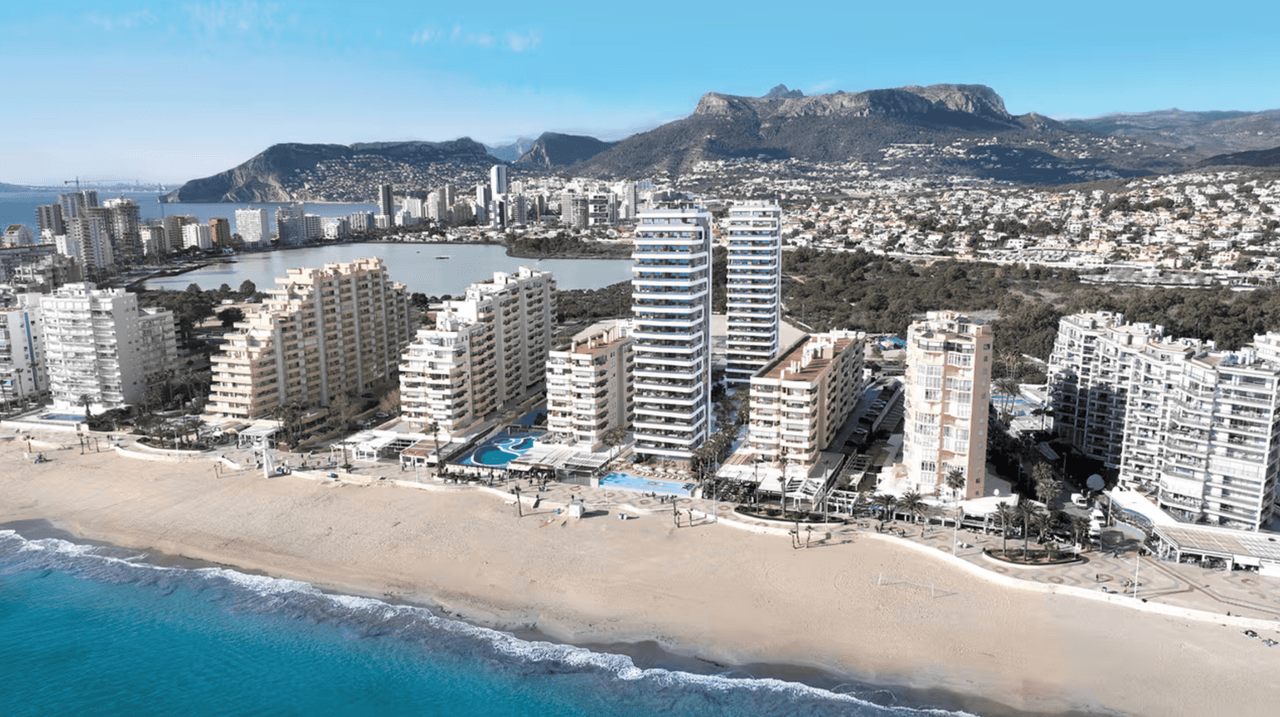
2-bedroom apartment with terrace and sea views – Calpe, Costa Blanca Norte
Ref. HP22101Costa del Sol is the choice for buyers who want to combine sea with higher prestige — golf, marinas and a premium rental market. The official regional portal highlights over 160 km of coastline, 125 beaches, 12 marinas and around 325 days of sunshine per year. Costa del Sol attracts buyers looking for a year-round lifestyle. The strongest interest clusters around Estepona — good value for the brand — and Marbella, the most prestigious address on Spain's southern coast.
Costa Cálida is often underestimated. With around 250 km of coastline — cliffs, white beaches, coves and many Blue Flag beaches — it offers the lowest entry price point, natural beaches and a quieter pace of life that suits families well. Horizon covers Costa Cálida and cities such as San Pedro del Pinatar, where modern apartments and villas are available at prices consistently below comparable Costa Blanca locations and well below Costa del Sol.
Foreign buyers accounted for 28.3% of residential purchases in the Valencia Community, 20.4% in Murcia and 14.2% in Andalusia in Q1 2025. This level of international demand acts as an additional layer of liquidity and underpins the attractiveness of the best coastal locations over the long term. Year-on-year price growth in March 2026: Málaga province +13.6%, Alicante province +10.5%, Murcia Region +23.1%.
From a rental perspective, AirDNA data shows short-term occupancy rates of around 61% in Torrevieja, 60% in Estepona, 58% in Marbella and 56% in San Pedro del Pinatar. INE reported that overnight stays in Spanish tourist apartments rose 5.9% in 2025, with non-resident stays up 6.8%. Costa Blanca and Costa Cálida generally offer a lower entry price and a more accessible rental model; Costa del Sol tends to be more expensive to buy but can compensate through higher nightly rates and a stronger premium segment. Note that since 1 July 2025 a registration number is mandatory for short-term rentals advertised on online platforms — check compliance at the property selection stage.
The purchase process is more straightforward than many buyers expect. It typically starts with property selection and reservation, followed by legal due diligence, financing (if needed) and completion at the notary. Key pre-purchase checks include the nota simple from the Property Registry, which confirms the owner, encumbrances, restrictions, Catastro compliance and any outstanding community fees or property tax. The notary independently verifies legal status and registers the deed.
Purchase costs depend mainly on whether you are buying new-build or resale and in which autonomous community the property sits. New properties attract VAT at 10% for residential use, plus AJD (stamp duty) at a rate that varies by region. Resale properties attract ITP (transfer tax): 7% in Andalusia, 7.75% in Murcia Region, and 10% in the Valencian Community (as of April 2026). This means two similar properties on different coasts can have meaningfully different transaction costs simply because of their administrative location.
Ongoing ownership costs include IBI (local property tax, set by each municipality), utilities, community fees if the property is in a complex with pool, lift or landscaping, building insurance and, if letting, property management. Before signing, it is worth calculating the full annual cost of ownership — especially if the goal is investment rather than purely personal use.
The first is the actual distance to the sea. In practice, "by the sea" can mean several very different things: frontline with a one-minute walk, a property 500–1,000 m from the water, or one that still requires a car. Horizon makes this transparent in every listing. For a buyer it means you should not compare prices per square metre without checking the real distance, floor level, sea view and year-round walkability.
The second is legality and permitted use. The nota simple should confirm legal status, encumbrances and outstanding debts. If you plan to let the property, also verify the local licence requirements, community rules and short-term rental registration compliance. This is especially important in high-tourism coastal spots. Also assess noise, traffic, proximity to bars, the marina or the promenade — and whether the property remains comfortable for personal use in peak season. The best seaside properties in Spain are not always those closest to the sand, but those that combine a genuinely good location, clean documentation and the right usage profile.
If you want to move from a general overview to specific listings, start with the full property search, then narrow by type: apartments, penthouses, houses and villas. If a specific region interests you, go directly to Costa Blanca South, Costa Blanca North, Costa del Sol or Costa Cálida, then explore cities such as Alicante, Torrevieja, Estepona, Marbella or San Pedro del Pinatar. That is the most efficient way to find seaside properties in Spain that genuinely match your lifestyle, budget and investment plan.
Answers before you buy.
Next step
Tell us your priorities — budget, location, property type. We will prepare a tailored shortlist without pressure and without irrelevant listings.