
What Is an Energy Certificate and Is It Mandatory?
Are you planning to sell, buy, or rent a property in Spain? Then you need to know what an energy certificate is and why it is so important. In this article, we explain what this document is, whether it is mandatory, how to obtain it, and what consequences may arise from not having it.
🏡 What Is an Energy Certificate?
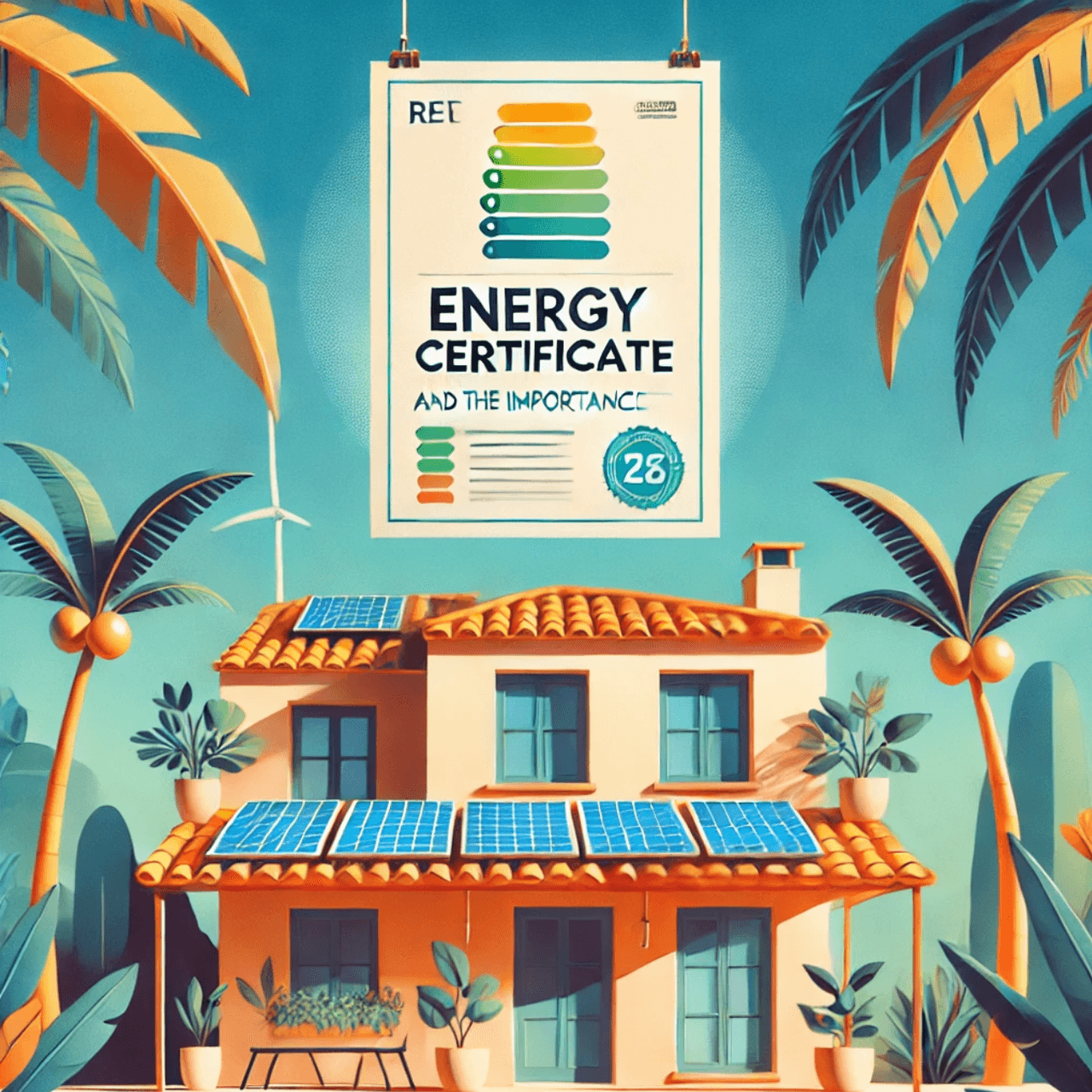
An energy certificate (Certificado de Eficiencia Energética – CEE) is an official document that specifies the energy efficiency of a property. It is similar to the energy labels you find on household appliances and shows how much energy the building consumes per square meter annually.
The certificate includes:
- Energy class of the property: A scale from A (most efficient) to G (least efficient).
- Average annual energy consumption: Expressed in kWh/m².
- Carbon dioxide (CO₂) emissions: Given in kg CO₂/m² per year.
- Recommendations for improving energy efficiency: Suggestions for upgrades that can reduce energy consumption and bills.
✅ Is the Energy Certificate Mandatory in Spain?
Yes, the energy certificate is mandatory in Spain when selling, renting, or advertising a property. This obligation arises from European Union regulations and the Spanish royal decree (Real Decreto 235/2013).
When Is the Certificate Required?
- 📌 When selling a property: It must be presented to the buyer before signing the notarial deed.
- 📌 When renting (short-term and long-term): The landlord must provide a copy to the tenant.
- 📌 When publishing a sales or rental advertisement: The energy class must be stated in the listing on the real estate portal.
❌ When Is the Certificate Not Required?
- 🏚️ Buildings with a usable area of less than 50 m².
- 🛖 Properties used as agricultural, industrial, or storage facilities.
- 🏤 Buildings intended for demolition.
- 🛎️ Short-term tourist rentals (up to 4 months a year) – although in some regions it is required.
⚠️ What Are the Penalties for Not Having an Energy Certificate?
Spanish law provides for financial penalties for not having a certificate:
- 💸 Penalties for not having a certificate in the advertisement: From 300 to 600 euros.
- 💸 Penalties for not having a certificate when selling or renting: Can range from 601 to 6,000 euros, depending on the severity of the violation.
- 📑 A notary may refuse to finalize the sale deed if the document is not provided.
🛡️ How to Obtain an Energy Certificate in Spain?
1. Find a qualified technician (Certificador energético):
An energy certificate can only be issued by a licensed specialist:
- 🏢 Building engineer (Ingeniero técnico)
- 🏡 Architect (Arquitecto)
- ⚙️ Technician in installations and energy efficiency
2. Schedule a visit and property inspection:
During the visit, the technician will conduct:
- Analysis of the building's structure: Checking insulation, windows, roof, and walls.
- Inspection of heating, air conditioning, and ventilation systems.
- Measurement of energy consumption by household appliances.
3. Receive the certificate and registration:
- After the inspection, the technician will prepare a report and assign an energy class.
- The document must be registered in the appropriate regional register (e.g., Junta de Andalucía, Generalitat Valenciana).
- After registration, you receive a reference number and an official certificate in PDF format.
4. Validity of the certificate:
The energy certificate is valid for 10 years. After this period, it must be renewed.
💰 Cost of Obtaining an Energy Certificate in Spain
The cost of the certificate depends on the location, size of the property, and technician's rates. Average prices are:
- 🏡 Small apartment (up to 80 m²): 80–150 €
- 🏠 Apartment (80–150 m²): 120–200 €
- 🏘️ Single-family house (150–250 m²): 200–350 €
- 🏢 Large commercial space: 300–600 €
💡 Tip: Avoid offers “at suspiciously low prices” – they may be fake certificates. Ensure that the specialist is licensed and registers the document in the regional register.
📈 How Does the Energy Certificate Affect Property Value?
Properties with high energy class (A or B):
- 🏡 Faster sales: Buyers are increasingly paying attention to operating costs.
- 💰 Higher market price: Energy-efficient homes sell for an average of 5–10% more.
- 📉 Lower bills: Modern insulation and heating systems can reduce energy costs by as much as 50% annually.
Properties with low energy class (E, F, or G):
- 🏚️ Slower sales or rentals: More and more buyers are avoiding energy-consuming buildings.
- 💸 Higher operating costs: Older installations generate high bills.
- 🚧 Need for modernization: In the future, owners may be forced to renovate to meet new EU energy standards.
🛠️ How to Improve Energy Efficiency of Properties in Spain?
Invest in thermal insulation: Replacing windows with double or triple glazing and insulating walls can reduce heat loss.
Install solar panels: Spain offers subsidies for photovoltaic installations, and solar energy can lower electricity bills.
Replace appliances with energy-efficient ones: Choose appliances with an energy class of A++ or higher.
Install smart thermostats: Modern energy management systems optimize electricity and heating consumption.
Modernize heating and air conditioning systems: Heat pumps and inverter air conditioners are more efficient than old gas or oil-fired boilers.
💡 Is the Energy Certificate Important for Short-Term Rentals?
Short-term rentals (e.g., through Airbnb) in Spain do not always require an energy certificate. It depends on the region and rental duration:
- In most regions, tourist rentals for up to 4 months a year are exempt from the requirement to have a certificate.
- In regions such as Valencia, Andalusia, or the Balearic Islands, the regulations are stricter, and the certificate is often required when registering a tourist property.
⚠️ Penalties and Consequences for Not Having an Energy Certificate
Spanish law provides for sanctions for owners who do not comply with the obligation to have a certificate:
- Lack of certificate in the sales or rental advertisement: Fine from 300 to 600 euros.
- Lack of certificate when selling or renting: Fine from 601 to 6,000 euros.
- Providing false energy class: Possible fine up to 10,000 euros.
Notaries in Spain often refuse to sign the sales deed if you do not present a valid certificate.
📝 Summary – Is the Energy Certificate Mandatory and Why Is It Important?
- The energy certificate is mandatory when selling, renting, and publishing advertisements.
- Lack of a certificate can result in financial penalties and problems with sales.
- Having a high energy class (A or B) increases property value and reduces energy bills.
- The cost of obtaining a certificate is relatively low (from 80 to 350 €), and its validity is 10 years.
💡 Looking for Properties with High Energy Class?
Feel free to browse our offer of energy-efficient apartments and villas in Spain:
🚀 SEO and Keywords (English):
- Energy certificate Spain
- Is the energy certificate mandatory in Spain
- How to obtain an energy certificate in Spain
- Cost of energy certificate Spain
- Energy certificate for rental in Spain